Patients lift systems allow caregivers as well as healthcare professionals and patients to safely and comfortably transfer and lift their patients. These systems are vital for those who have limited mobility like seniors, handicapped people, or those recovering from injuries or surgery.
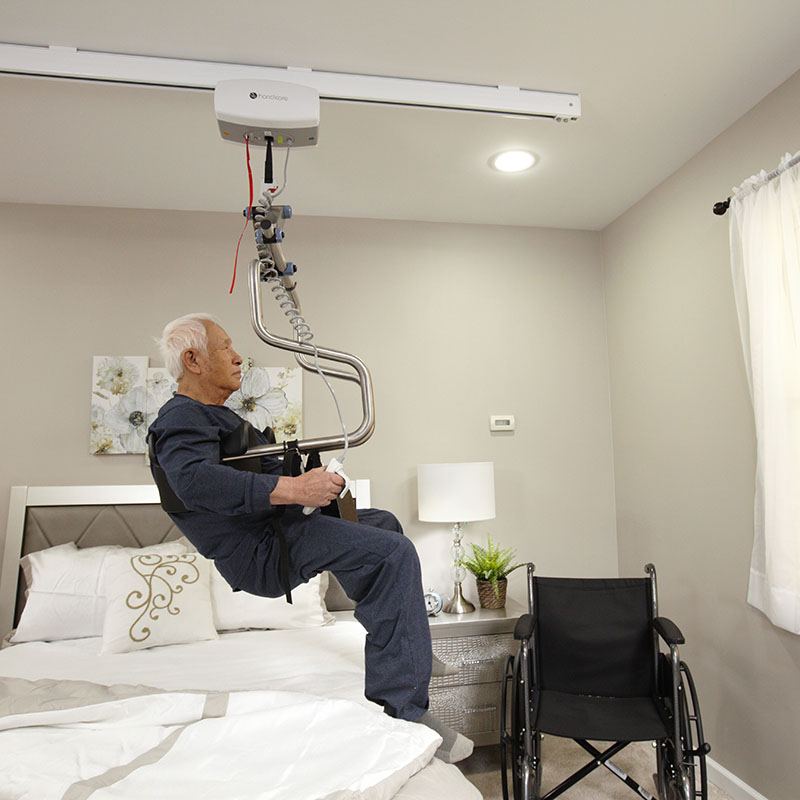
In the marketplace, there are many types of patient lifts, including overhead Hoyer lifts and mechanical lift transfer and mobility lifts. We will examine each system in depth, and talk about their benefits.
Mechanical lift transfer
Mechanical lift transfer systems are patient lift that uses the power of electricity or hydraulics for lifting and transferring patients. The system is composed of three elements consisting of a lift device with a sling and a wheeled base. The lift unit is linked to the sling which is tied around the patient. It raises them from a lying or sitting position.
Mechanical lift transfer is an efficient method for ensuring safe transfers of patients, as it reduces the chance of injury to both the patient and the caregiver. The lift unit does the majority of the heavy lifting, reducing the burden on caregivers. Mechanical lift transfer systems are easy to maneuver in small areas. This makes them an excellent choice for home care.
Overhead hoyer lift
The overhead Hoyer lift uses an overhead track to transfer patients. It comprises tracks that are mounted on the ceiling, a lifting unit that is attached to the track and a sling that wraps around the patient.
The overhead Hoyer lift is ideal for those who need frequent transfer, because it is a secure and effective method of moving patients from one place to another. The lift also allows for easy transfer from a chair an existing bed to the wheelchair.
Since the lift hangs from the ceiling, it provides greater floor space. This is particularly beneficial for rooms that have small space. The overhead Hoyer lift is also capable of supporting more weight capacity than other lift for patients which makes it ideal for bariatrics.
Mobility lifts
Mobility lifts are designed to assist people with mobility issues move around their homes and other environments. These systems comprise the base unit that is wheeled and an arm lift that has an attached sling. The patient is slung into the sling and lifted up with the help of the arm that lifts.
Mobility lifts are excellent for those who require assistance in their mobility however they are not able to walk or stand on their own. They are an efficient and secure means of transportation that allows patients to maintain mobility and independence, as well as their quality of living.
Mobility lifts can be moved around, which is one of their major advantages. The mobility lift systems can easily be transported from one location to the next. This is why they are a good option for a variety of settings. Mobility lifts are also easy to use and require only minimal effort from the caregivers.
Picking the right patient lift system
It is important to consider the mobility of the patient in terms of their weight and height as well as any environmental conditions in which they will be placed. Think about the capabilities of the caregiver as well as limitations, as well as the budget when deciding on a lift system.
The overhead Hoyer lift can be a great option for patients who have limited mobility or who require frequent transfers. The overhead Hoyer lift is simple to operate, provides an efficient, safe method of moving patients and also allows for a larger available floor space. But, it’s costly and requires installation and maintenance, which makes it ideal for long-term care facilities.
Mechanical lift transfer systems are a valuable asset in any home-based care setting due to their easy use, low demands on caregivers physically and their affordability. It is important to take the time needed to assess the situation prior to purchasing the device. You can make sure you’re making the correct choice by conducting some research and consulting with experts in the field. After you’ve collected all the information, it should be simple to make a decision regarding mechanical lift transfer.
For more information, click mobility lift systems